Almanac's 14th editor sees herself as steward of long legacy
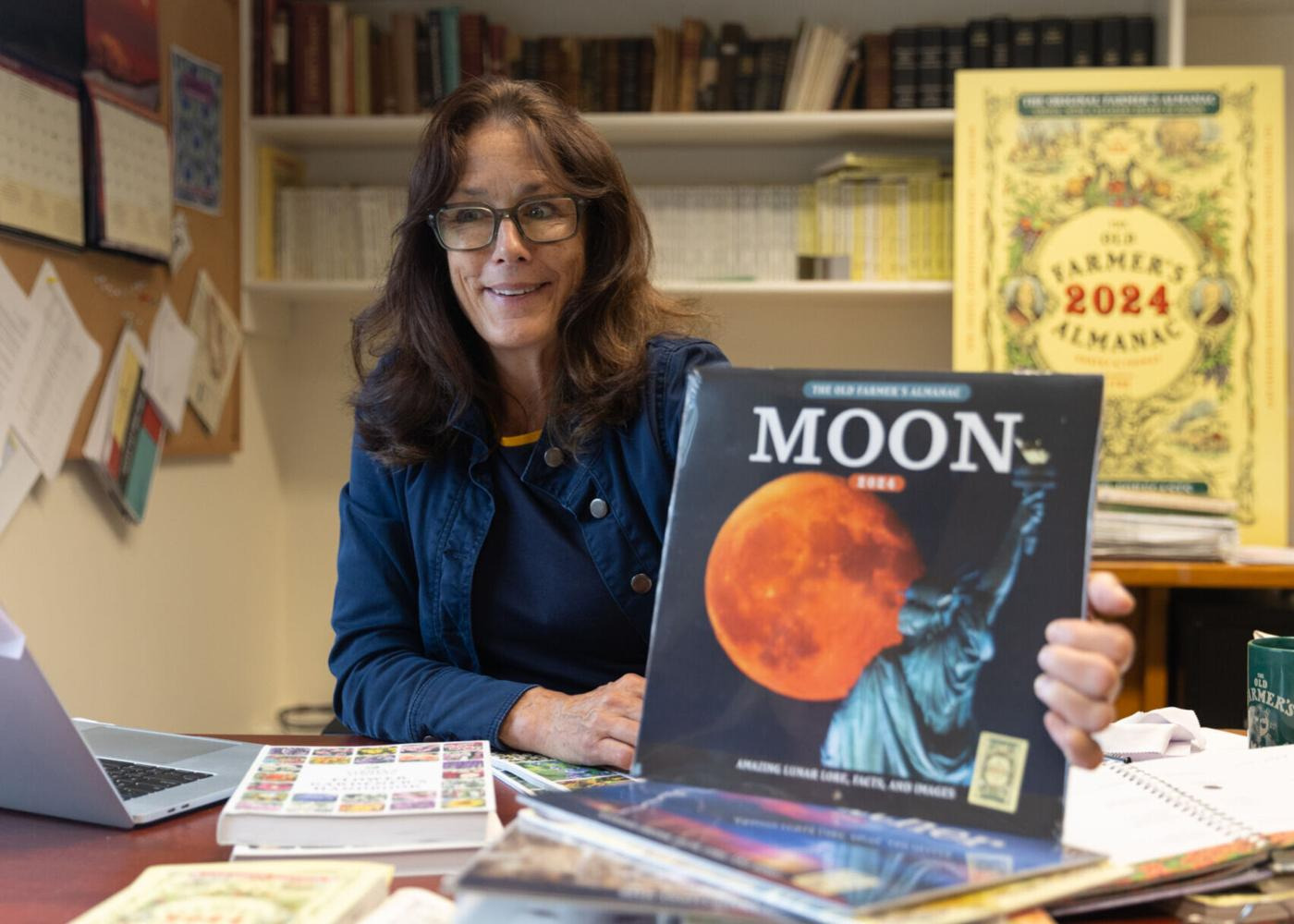
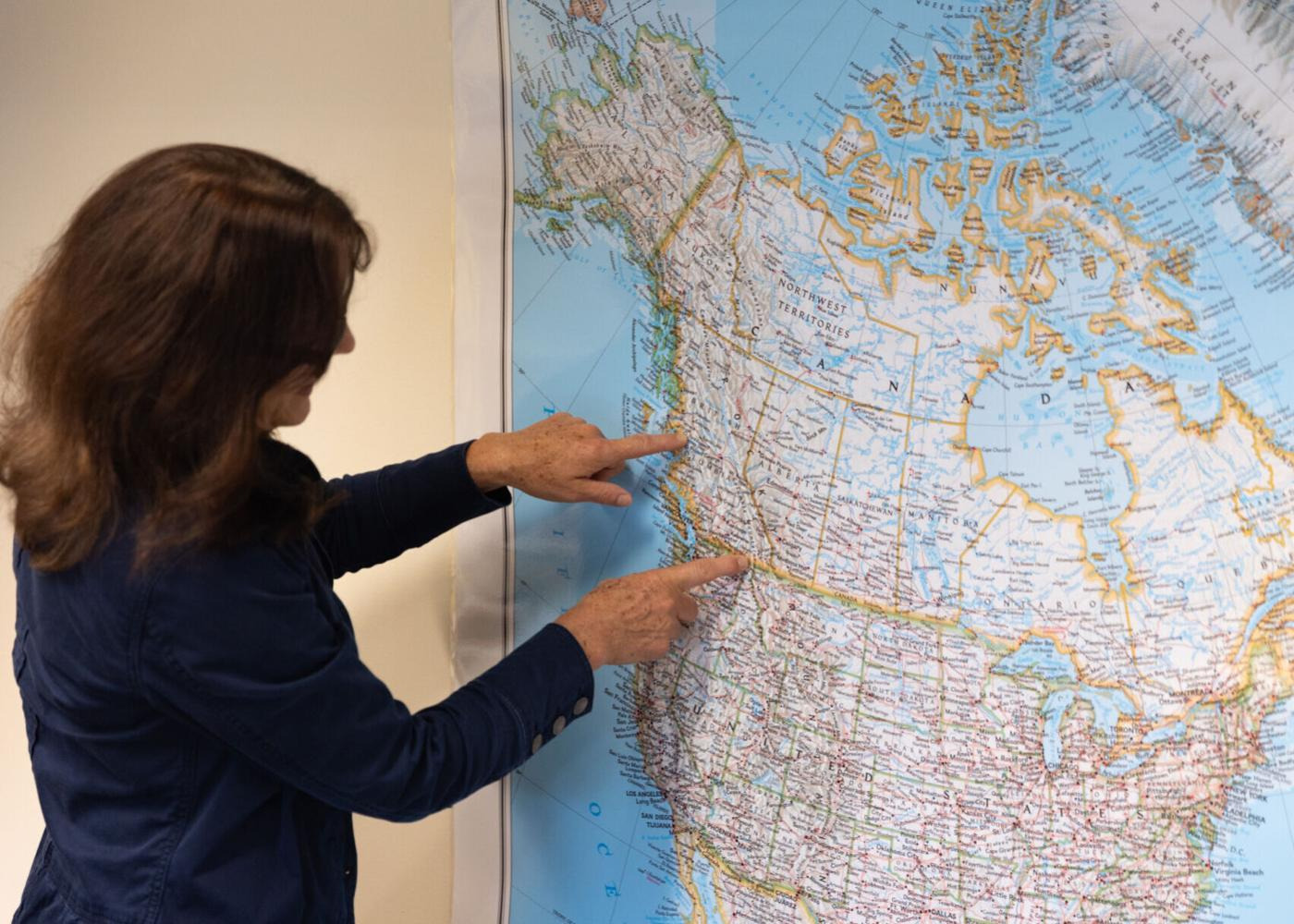
A massive map of North America hangs from the wall in Carol Connare’s office at Yankee Publishing in Dublin.
As she scans the states and provinces that make up the U.S. and Canada, she considers how rural communities across these two coast-to-coast nations find unity in the farming, folklore and weather forecast publication she edits — which may feel as quintessentially slice-of-rural-life to them as their nearest corner store.
She grew up in Bedford, practically in the backyard of where The Old Farmer’s Almanac is produced annually in Dublin. Now, she’s its newest editor.
Connare, 57, of Amherst, Mass., took over the role in June, becoming the 14th person to be bestowed the title in the almanac’s 230-year history. But to her, she’s just the next steward in line to help sustain the traditional book.
The Old Farmer’s Almanac is an astronomical, agricultural and advice compendium that includes weather predictions, horoscopes, star charts and feature pieces on farming, gardening and small-town life.
It’s distributed nationwide in bookshops, agricultural stores and supermarkets, and Canada receives its own separate edition.
“The editor is really just one person of many; we have this whole staff,” Connare said from her desk at Yankee Publishing, which owns and prints the almanac. “The idea of the almanac and everything else is just a legacy. We don’t need to mess it up, it’s not broken, so I’m not here as the new editor to bring anything bold.”
The almanac’s existence has endured the development of cross-continent communication, mass media and now, the Internet and social media.
Connare attributes that to strong leadership from her predecessor, Janice Stillman, who retired from her editor position — after serving more than 20 years in the job — with the almanac’s 2024 edition, which launched Aug. 29.
Connare’s first act of business for the 2025 almanac is to assign stories to writers. She will then begin working to create the edition after she helps complete an annual container-gardening book and finishes work on yearly Old Farmer’s Almanac-branded calendars with other editors.
Part of the challenge is picking ideas that might be useful a year from now and not writing from a current-day perspective, and brainstorming topics that will appeal to a broad age range of readers, she said.
“The whole staff, we sit down with ... 100 ideas and think, ‘What is the almanac angle? What is useful? Will it be our brand?’ ” Connare said. “... We are attracting a younger audience. The largest segment of new gardeners is 18- to 35-year-olds; [population growth] is through the roof, with containers, houseplants and also people sticking stuff in the ground.”
Connare said sourcing of the material used for features draws from history and folklore, but also needs to adapt to current cultural trends and diverse populations.
“When you look at our farmer profiles, it’s a lot of younger and diverse farmers because that’s what is in North America,” said Connare, who was previously a writer for Yankee Magazine from 1997-2002.
That’s diversity in race, like a Black Manitoba farmer who uses hydroponic practices for her crops, and diversity in techniques, like a young cattle farmer who rotates 50 pounds of livestock — far more than his father who also raised cattle, Connare explained.
“I think the younger set of farmers are really driven by the fact that it actually does make a difference when you pull the food out of your own backyard, you don’t drive to the store that day,” she said.
Though Connare now loves to garden and grow her own food, she wasn’t always of that mindset.
Her late mother, Mary Anne, and sister, Josie, whom Connare described as “houseplant wizards,” were the green thumbs of the family when she was growing up in Bedford.
While her mom was carefree and planted vegetables sporadically around shrubs on their family property, Connare was always more formulaic about the gardening process, as evidenced in the application she sent to the almanac’s publisher, Sherin Pierce.
“When I was applying here, I gave the regular résumé, but I was like, ‘How is Sherin going to know where I’ve been for 25 years?’ ” Connare said. “So, I did this kind of résumé of my [plant hardiness] zones.”
Plant hardiness zones are a standard scale of temperature ranges based on climate, which gardeners and producers can use to determine which plants are best suited for a certain geographical area, according to the U.S Department of Agriculture.
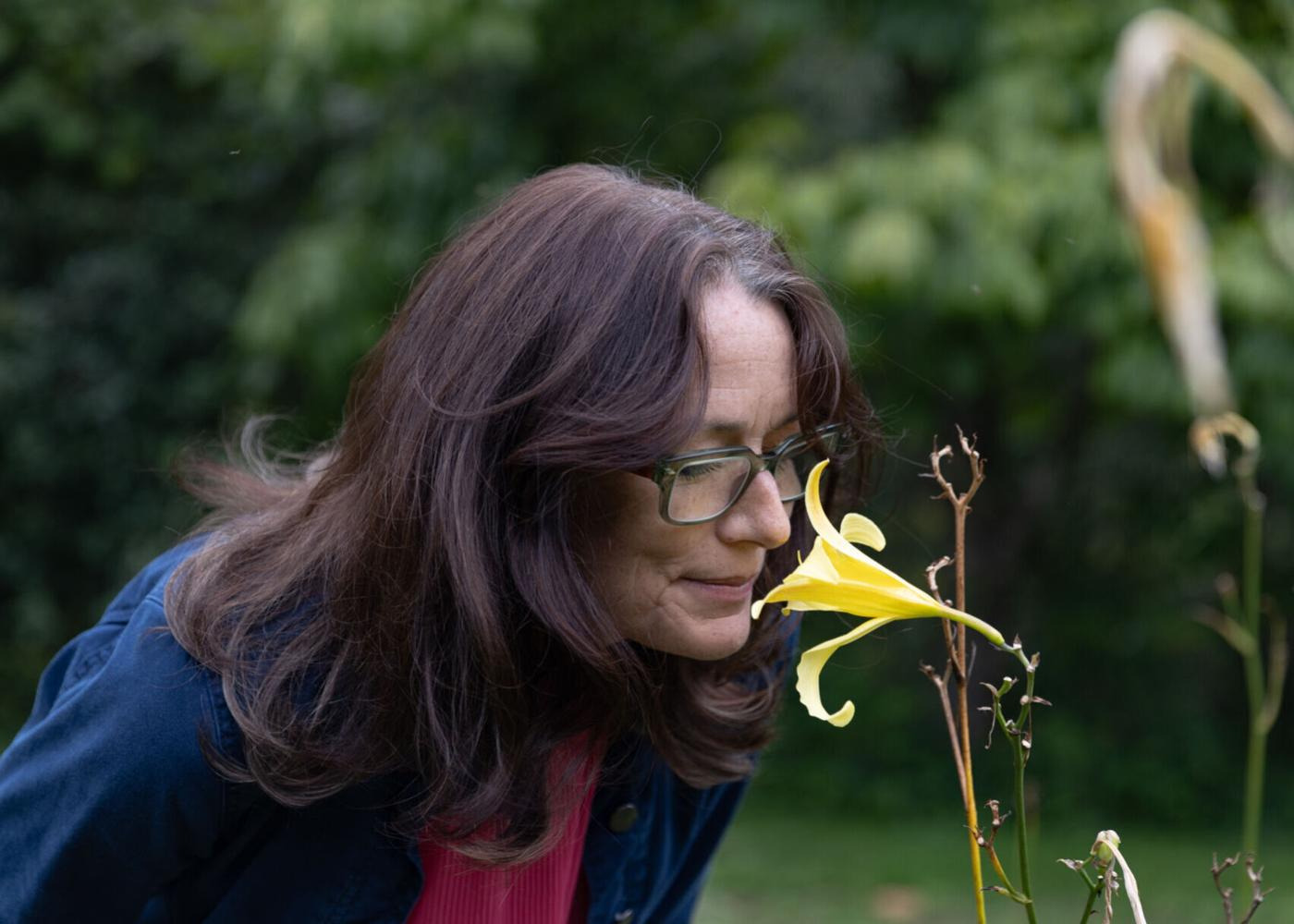
Pierce recalled being charmed by Connare’s zone map.
“[Connare] had put together all the gardening that she had done personally in life over the different places she lived in with the years, and she presented it in a way that looked just like our annual garden guide,” said Pierce, of Dublin.
One place that may have stood out was Alaska, where Connare had lived several years with a boyfriend from Fitzwilliam, after graduating from the University of New Hampshire in 1988.
She and her partner moved to Salcha, Alaska, to work with a 100-canine-strong sled dog kennel, which Connare called an “adventure into photography and journalism.”
“We lived on the banks of the Yukon River, and we basically did subsistence fishing for salmon for the kennel,” she said. “... That really got me in touch with gardening and food, because we were pulling fish out of the river, but I’m also pulling my dinner out of the river.”
That journey had come after she worked for what was then called the Peterborough Transcript from 1989-1990. After Alaska, Connare returned to the Monadnock Region to work at a music venue, The Folkway, in Peterborough.
That role opened a door for her as a folk music columnist at CD Review, a now-defunct Peterborough-based magazine. Soon after that gig, she wrote a column for the New England Folk Almanac.
As Connare ventured more into journalism, she crossed paths with college friend Lori Decato in 1992, who prompted her to move to the Seacoast. The two jointly launched a publishing venture, Idea Outfitters.
“We did a cookbook, we did a lot of marketing things, and we did a thing called the ‘Taste of Portsmouth,’ ” Connare said. “We went around to every restaurant and ... I was the writer, and we did a historical angle all around there, and it was a bit of a success.”
Then, she was part-time writing a New England camping guide overviewing 800 campgrounds, and part-time editing at Phillips Exeter Academy, after which she ended up returning to the Monadnock Region for a second stint at The Transcript.
“That’s when Yankee hired me, because I had just traveled all over New England, and they needed a travel editor,” Connare said, recalling moving to Jaffrey in 1997 to write for Yankee Magazine.
In between her roles at Yankee, she held editorial positions with Worcester Polytechnic Institute in Worcester, Mass., and the University of Massachusetts Amherst, where she served primarily as director of library development and communication for 13 years.
Jay Shafer, who served as UMass’ director of libraries from 2004-16 called Connare “instrumental” in securing funding for the institution.
“We had a campus-wide fundraising capital campaign, and the library’s goal was a little bit over $45 million,” Shafer said. “Through various efforts by Carol, friends of the library and the campaign committee, we exceeded the goal a little bit.”
Shafer, whom Connare considers a friend and mentor, shared that Connare received national awards for her work as a library professional.
“Her work was recognized and rewarded as being some of the best in the country,” he said.
Though he felt her leaving the university was bittersweet, Shafer said it was a natural step.
“She grew up in New Hampshire and has friends and relatives up there,” he said. “The Old Farmer’s Almanac position just seemed to suit her very well with her interests in gardening and cooking.”
As Connare prepares for releasing the 2025 almanac, she has been working hard to generate new ideas.
“I’ve been thinking a lot about allergies, because I think those are on the rise,” Connare said of future almanac plans. “I think I’ll be doing some writing about that for the next almanac and looking at experts and how they’re saying there’s 20 extra [allergy season] days a year.”
Post a comment