Shot on location
When the production crew of last year’s blockbuster “The Holdovers” needed a home for their fictional New England boarding school, they scouted out filming locations across many institutions. The film’s interior shots could be mistaken for portraying schoolhouse scenes from 1970s New Hampshire, but “The Holdovers” was not shot here.
It was shot in Massachusetts.
Portsmouth-based filmmaker Chris Stinson, owner of Live Free or Die Films, was involved in that production, which he says he wishes could’ve been made locally. But when movie crews look toward the northeast, the Granite State isn’t in their sights.
“We tried to bring ‘The Holdovers’ to New Hampshire because some of the boarding schools would have been really great locations for it,” Stinson said recently. “Ultimately, the studio wouldn’t allow us to do it, and it’s their money. They get to tell you how they want to spend it.”
That’s because the neighboring Bay State has sunk far more effort into attracting big-budget flicks from other film hubs like Atlanta, New York and Chicago, through production incentives. In Massachusetts, the state government offers film tax credit incentives and has a strong film office to support the industry.
Regional film offices act as liaisons between production companies and state and local officials, negotiate opportunities with property owners for scene shooting locations, issue paperwork for those locations and inform crews about the areas where they’ll work, to name some purposes.
But in New Hampshire, the state’s Film and Television Office was on its last legs in 2021 with a $123,000 yearly operating budget and just one staffer, the Eagle Times in Claremont reported in March of that year. Today, a webpage for a film bureau exists on New Hampshire’s tourism website, VisitNH.gov, but local industry figures told NH Business Review that the state has all but scrapped its dedicated resources for moviemakers.
That would add it to a handful of states without any devoted film commission agency. The others are Alaska, Delaware, Florida, Vermont and Wisconsin, according to the Tampa Bay Times, which reported on the Sunshine State’s closure of its industry office in January.
Carolyn Leary, an events planner and manager at Derry event production business Events United, said there are some caveats to Florida’s situation, where there is also no film tax incentive.
“Even though Florida as a state doesn’t have an incentive, we still consider it as one of the 45 states that does, because Miami has an incredible incentive, the Keys has an incentive, and there are a lot of local incentives that very easy to do films there,” she said.
Leary and her colleague Tim Messina are two of the key players behind a developing effort to woo more movie producers to the Granite State, beginning with the formation of a not-for-profit common interest group called the New Hampshire Entertainment Alliance.
The pair foresee it operating as a 501(c)(6) business league, networking with legislators to discuss what a more vibrant film and entertainment scene might look like in New Hampshire and how it could impact their constituents.

“The aspirational view of all of this is that we can be supportive in other industries, whether that’s concerts or venues,” Leary said. “During COVID, Tim worked really hard to try and bring some of those airport concerts here that were happening quite easily in other areas, and we just couldn’t make it work for a variety of reasons. That shouldn’t be happening.”
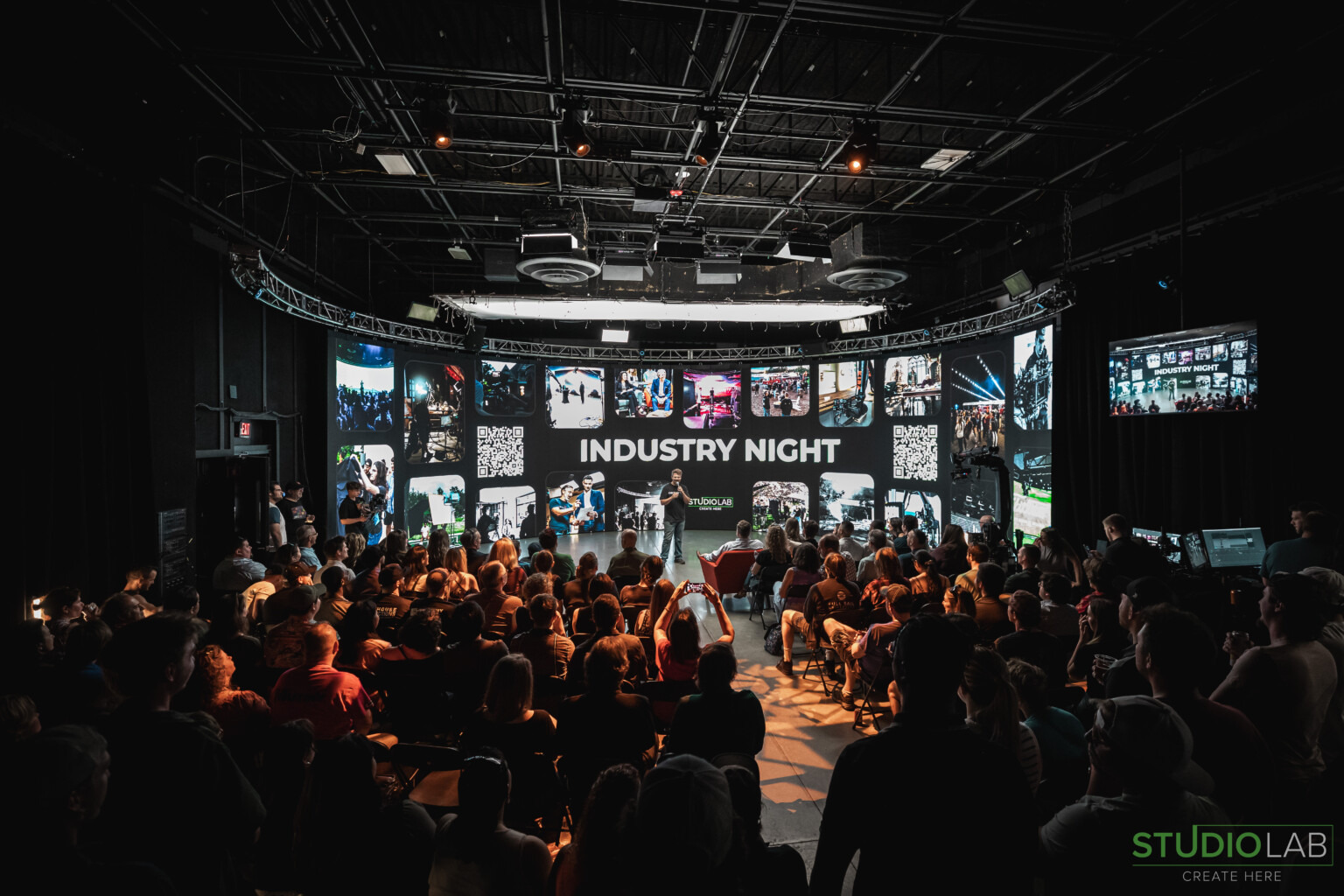
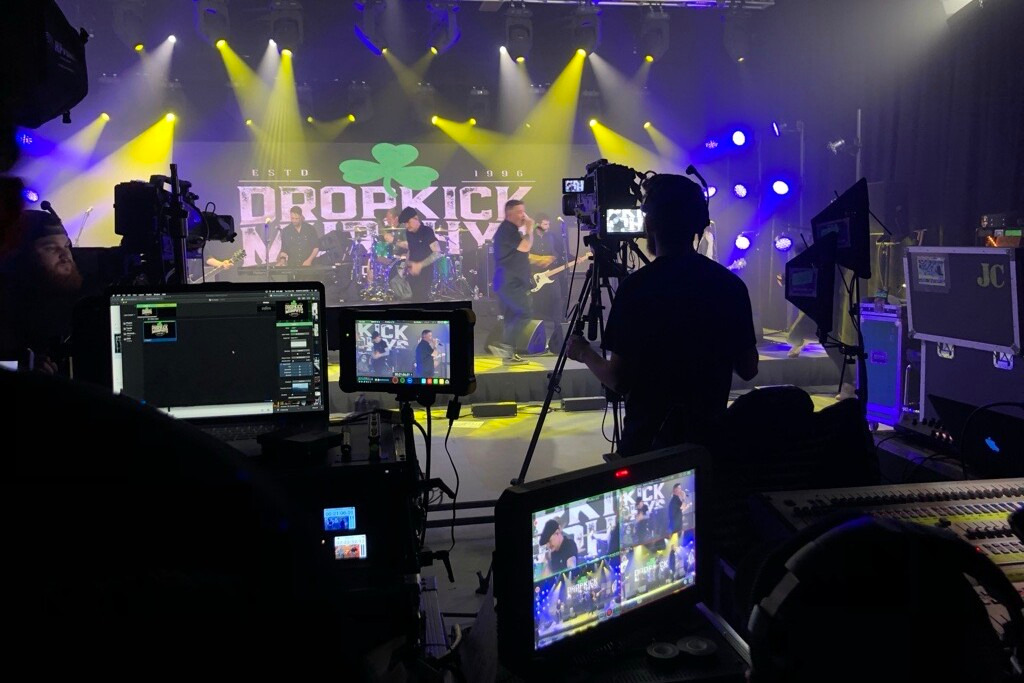
Messina is CEO and owner of both Events United and a video production business, Studio Lab, with both companies coexisting in the same facilities in Derry. The two businesses work with well-known clients regionally and nationwide. Events United handles sound and lighting setups, stages and backdrops, and Studio Lab provides a building with multimillion-dollar equipment for creating advertisements, TV programs and podcasts.
Events United’s clients have included the Nikki Haley 2024 presidential campaign, Oceania airline Air New Zealand and Rhode Island emerging singer-songwriter JVKE. Studio Lab, meanwhile, has developed ads for Hannaford, shot installments of CBS news program “60 Minutes” and created marketing videos for stock image company Shutterstock.
Because of New Hampshire’s lack of a sales tax, Messina and Leary are unsure about whether the state could compete with others that award movie tax incentives. Massachusetts has a tax credit equal to 25% of film production costs, 25% of payroll cost and exemption from sales tax. Elsewhere, Illinois has a 30% credit, and New Mexico boasts offers up to 40%.
With the type of productions Studio Lab hosts, Messina says there might be incentive opportunities for corporate and commercial work rather than feature films, beginning the groundwork for a greater industry on top of what his company and others like Manchester ad agency GYK Antler have already created.
“If we at least take that step into saying, ‘Hey, if you’re shooting a commercial in New Hampshire, you get a 10% rebate or something like that,’ … I think there’s possibly an incentive there to start and build something off of that,” Messina said.
Leary compared Messina’s idea to financial benefits the state and local municipalities have offered businesses in other industries, specifically, BAE Systems. The defense contractor was offered an incentive package of roughly $15 million in 2019 to launch operations in Manchester.
Other notable companies to invest in New Hampshire thanks to state-issued incentives include Hitchiner Manufacturing in Milford, which opened a new plant in the city after receiving $8.7 million, New Hampshire Public Radio reported. Lonza Biologics expanded its Pease facility and added 1,000 jobs with a nearly $3.5 million package.
“If we’re able to make it work for real estate and able to make it work for other large companies, why can’t we make it work for film?” Leary said.
Chris Stinson said from his experience in the industry, such incentives could at least get studios interested in partial filming in the state since tax credits may be a “really hard sell.”
“For example, if you offer free state property — like sometimes there are old warehouses or buildings or even schools — a lot of states will do things like that to incentivize in other ways,” he said. “Maybe we’re filming part of (a movie) in Massachusetts and part in New Hampshire because we’re so close together.”
Opportunities like that could benefit not just the state but also, the studios’ production budgets. Stinson was a member of the production behind the 2019 mystery film, “Knives Out.” He recalled the costs incurred filming on location at a mansion in Massachusetts.
“We filmed there for two or three weeks, and it was about $250,000 a week just to rent the location, so we ended up spending almost a million dollars,” Stinson said. “There were several places in New Hampshire we could have shot at that were probably a fifth of that cost.”
The filmmaker spoke from Boston, where he was starting work on a new movie. There, he said, the studio would be spending “hundreds of thousands of dollars just to park all the trucks,” whereas Manchester might be a more affordable alternative with state support.
The proposed NH Entertainment Alliance will be discussed publicly in a panel during the New Hampshire Film Festival in Portsmouth, from 12:30 – 1:30 p.m. at The Press Room on Saturday, Oct. 19. Leary will lead the conversation, joined by Stinson, Messina, unnamed legislative representation and public affairs professional Jim Merrill.
Merrill, a managing shareholder at the Manchester branch of New England law firm Bernstein Shur, called himself a “friend of the (film) industry” in a video chat before his panel appearance. He’s enthusiastic about the effort Leary, Messina and others have put forth and said New Hampshire has a lot to be proud of that it can market to movie studios.
“You’ve got a great airport in Manchester that gives you access to the entire state, you’ve got tax appeal and culture, and you’ve got a diversity of landscapes — the mountains, the lakes, the ocean, old mill towns, rural and urban settings, all within an hour of one another,” Merrill said. “But you’ve got to package that. I don’t think there’s anything holding New Hampshire back but for the fact there are other states more aggressively and directing courting this business right now.”
He, too, backed the notion of state and private sector partnerships for growing the filmmaking business. Meanwhile, Manchester-Boston Regional Airport (MHT) Director Ted Kitchens said he is amicable about accommodating productions, should the Granite State film industry grow.
“With (MHT) being the second-largest entry point into New Hampshire and the premier award-winning airport in Northern New England, it makes sense to include our airport in the filming process,” Kitchens said in an emailed statement. “We would welcome filmmakers to consider MHT in their next story.”
Dan Hannon, a Portsmouth screenwriter and the NH Film Festival’s co-founder, says it’s been “exciting to have this (alliance) come together,” as the festival enters its 22nd year. He compared it to an attempt to build up New Hampshire’s movie potential in 2011 that didn’t gain the following needed, even with assistance from the still-active state Film and Television Office.
“There is not even a film office anymore, so this is truly starting from scratch,” Hannon said. “But it’s the best effort we’ve seen yet because of how many people are now doing (film work) here in New Hampshire. There have been like 100-plus people at meetings getting the ideas together and how they’re going to maybe lobby the state. It’s really cool.”
Post a comment