Monadnock Region farming season mired in late spring frost, summer flooding
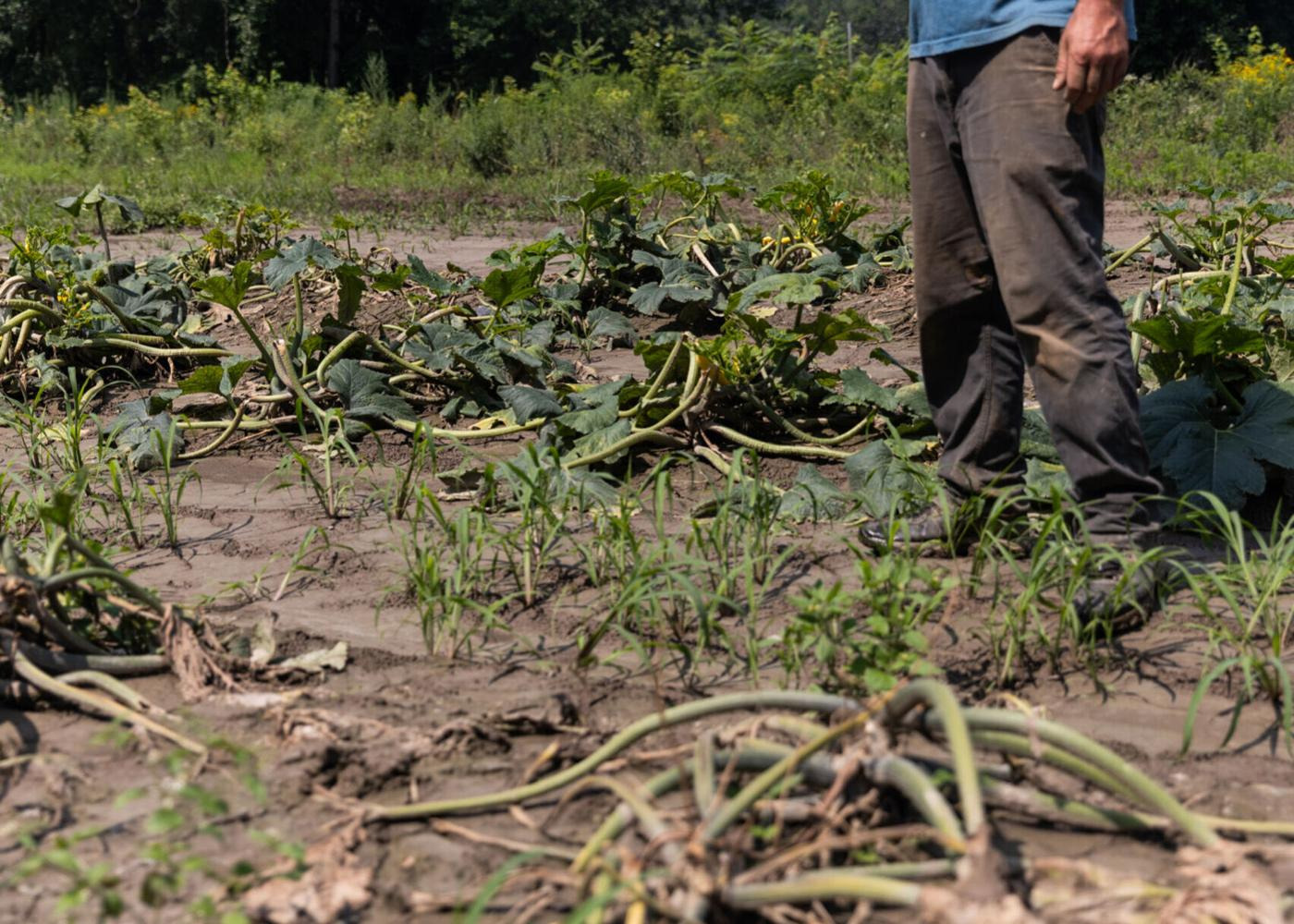
Between a May frost and July flooding, the Monadnock Region’s agribusiness sector has been dealt a one-two punch by weather since late spring, markedly different from the drought farms and orchards faced last year that prompted federal assistance for those in need.
Farmers in communities from Walpole to Fitzwilliam say they have seen the practically combined weather events disrupt their summer planting, setting back harvesting of some crops and outright ending other crops for the season.
“I don’t have any eggplants for sale because those plants never made it through all that garbage,” said Ron Rzasa of Out of the Woods Farm in Chesterfield, whose produce was taken out by a late frost just before Memorial Day weekend and later heavy rainfall and floods in early July.
“There’s no lettuce and no spinach, and it’s been a challenge. We’re still selling product, but we’re working twice as hard for half the money because we’ve got to work around all the rotten [crops] and keep replanting.”
The frost on May 18 originated from a cold and dry air mass coming from Canada, meteorologist Sarah Jamison of the National Weather Service in Gray, Maine, previously told The Sentinel. Jamison said the median date for a late spring freeze is usually around May 11.
Michael Greene, executive director of the U.S. Department of Agriculture’s Farm Service Agency office for Cheshire and Sullivan counties in Walpole, reported that apples and blueberries in the agency’s coverage area were hit particularly hard by the frost.
He noted that some crops had taken damage earlier in the winter when a deep freeze dropped temperatures into the negatives from Feb. 2-4.
“That was kind of the first hit [of] the season, nearly eliminating our peach crop [this year] here in Cheshire County,” Greene said.
Though NWS issued a warning for the May frost, there was little that farm producers like Jack Rixey, of Fitzwilliam’s Dog Days Farm, could do to protect their produce on short notice but cover it up or use heat lamps and hope for the best as temperatures suddenly plummeted into the 20s in much of the state.
“The frost-free date in our zone is June 1, so typically most people say Memorial Day [is the last frost],” Rixey said.
Rixey was formerly the manager of Tracie’s Community Farm for the past five years, and he purchased the property late last year and turned it into Dog Days Farm, making this summer his first in operation.
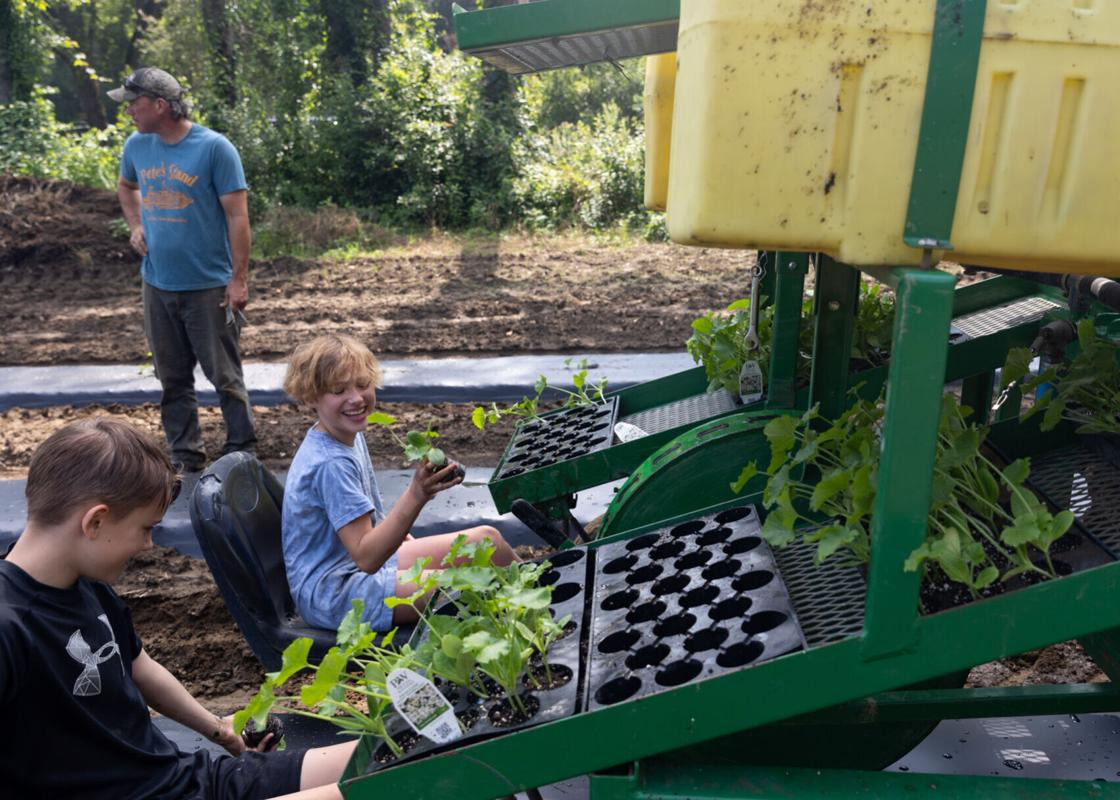
The rainfall this season that’s followed the frost, Rixey said, has made for a difficult founding year.
“We did not see any river flooding, … but we have seen a lot of disease coming in earlier than usual throughout the summer from consistently wet soils, like a lot of root rot,” he said.
Regular rainstorms have created muddy farmland conditions that have made driving tractors onto the fields to replant produce impossible for Rixey for the past few weeks. The most significant flooding caused by heavy rain impacted communities across the region from July 9-11, with high water rising over riverbanks, out of streams and increasing water levels in ponds and lakes.
“We’ve had standing water in one of our fields since the beginning of July where it’s just not had a chance to fully dry out,” Rixey said.
At Pete’s Stand in Walpole, Teresa Janiszyn said the farmland there is seeing a similar situation, where drowned crops remain in soggy soil weeks after the neighboring Connecticut River flooded. Nearly 20 acres out of the property’s total 45 farming acres ended up underwater at the peak of the weather event, Janiszyn said.
She and her family are concerned the flooding could have plagued their farm’s corn and other crops with Phytophthora blight, a bacterial infection caused by waste from the floodwaters and the long-term effects that could pose.
Pete’s Stand suffered damage from the bacteria in 2011, Janiszyn said, when the riverbanks rose due to the impact of Hurricane Irene.
“You have to rotate away from those crops that are affected for initially three or four years, but now we’re finding it’s really like eight or 10 years,” she said.
That’s not just a risk for fruits and vegetables. Nearby to Pete’s is Walpole dairy business Brookfield Farm, where co-owner Holly Gowdy fears hay crops the farm uses to feed its cows may have been contaminated by bacteria.
She noted that about 12 acres of the farm’s hay went under high water from the Cold River in early July.
“We have our fingers crossed we’ll be able to make enough hay,” Gowdy said. “The late frost was detrimental to growing our first crop of hay, and then it’s been so wet and rainy. The grass is growing, but the fields are so wet that it’s hard to get the machinery onto the field to make a crop of hay because you don’t want to damage the land in the process of making feed.”
While Gowdy and others were still able to harvest some of Brookfield’s first hay crop, impacted by the freeze in May, she said it was damaged in that it was less nutritious for the cows.
“When that frost happened, grass plants were just getting to the stage where they’re at their highest level of nutrition,” she explained. “First cutting usually happens in our area around Memorial Day weekend, when those grass plants are just starting to put out their seed heads.
“That’s when those plants … are the most nutritional, with the highest protein and sugars and make exceptionally good feed for cows.”
The frost damage led the state office of the USDA’s Farm Service Agency to request a secretarial disaster designation that opens up emergency loans for farmers.
The designation was granted by the federal USDA office on Monday, July 24, authorizing the FSA to provide loans of up to $500,000, with a 3.75 percent interest rate, according to Marilyn Milne, executive officer of the Concord office.
The loans are open to farmers in areas including Cheshire, Sullivan and Hillsborough counties affected by the freeze, and neighboring counties in Vermont and Massachusetts. FSA intends to issue loans to those whose equipment may have been damaged or who may have incurred debt from lost crops. People can apply through March 25, 2024, Milne said.
As for the more recent floods, she said the New Hampshire FSA is awaiting more damage reports from affected counties before it can request a separate disaster declaration to open up loans for those impacted.
“We requested [reports] based on a 30 percent or greater production loss and at least one crop loss for the county, so we aren’t sure yet from the flood what crop losses we could incur up to that level,” Milne said Wednesday.
For both the frost and floods, the Cheshire-Sullivan FSA’s Michael Greene also highlighted the USDA’s Noninsured Crop Disaster Assistance Program, where the agency helps farmers who’ve suffered low or lost crops due to natural disasters.
“It’s effectively crop insurance where we’re working with people who currently have coverage to help them get a payout on their lost crops,” Greene said. “We’re also working with some people who don’t [have coverage] … if they’re low-income [or] socially disadvantaged veterans.”
Post a comment